Pavement Upkeep That Prevents Liability Issues
Parking Lot Maintenance in Chillicothe for commercial properties with cracking, faded markings, and pothole formation
Commercial parking areas develop wear patterns from repeated vehicle traffic, weather exposure, and standing water that collects in low spots. Solid Rock Sealcoating & Asphalt Maintenance LLC handles crack filling, pothole repairs, line striping, and overall asphalt maintenance to address these issues before they create tripping hazards or customer complaints. Property managers in Chillicothe rely on this service to maintain accessible parking compliance and extend the time before full resurfacing becomes necessary.
Maintenance combines several processes depending on current pavement condition: filling cracks wider than a quarter-inch with rubberized material that flexes with temperature changes, patching potholes with hot-mix asphalt compacted to grade, and repainting parking space lines and directional arrows that have faded below visibility standards. Each step targets a specific failure mode that accelerates if left unaddressed through multiple winter seasons.
Request a lot inspection to identify which maintenance tasks will have the most impact on pavement longevity and safety.
What Changes After Comprehensive Lot Maintenance
Crack filling prevents water from infiltrating through the surface into the base layer, where freeze-thaw cycles create voids that eventually collapse into potholes. The rubberized filler remains flexible rather than hardening and cracking out during winter, so it continues blocking water entry season after season. Pothole patching restores a smooth driving surface and eliminates the impact damage that occurs when vehicles drop into depressions, which worsens the hole and cracks the surrounding pavement.
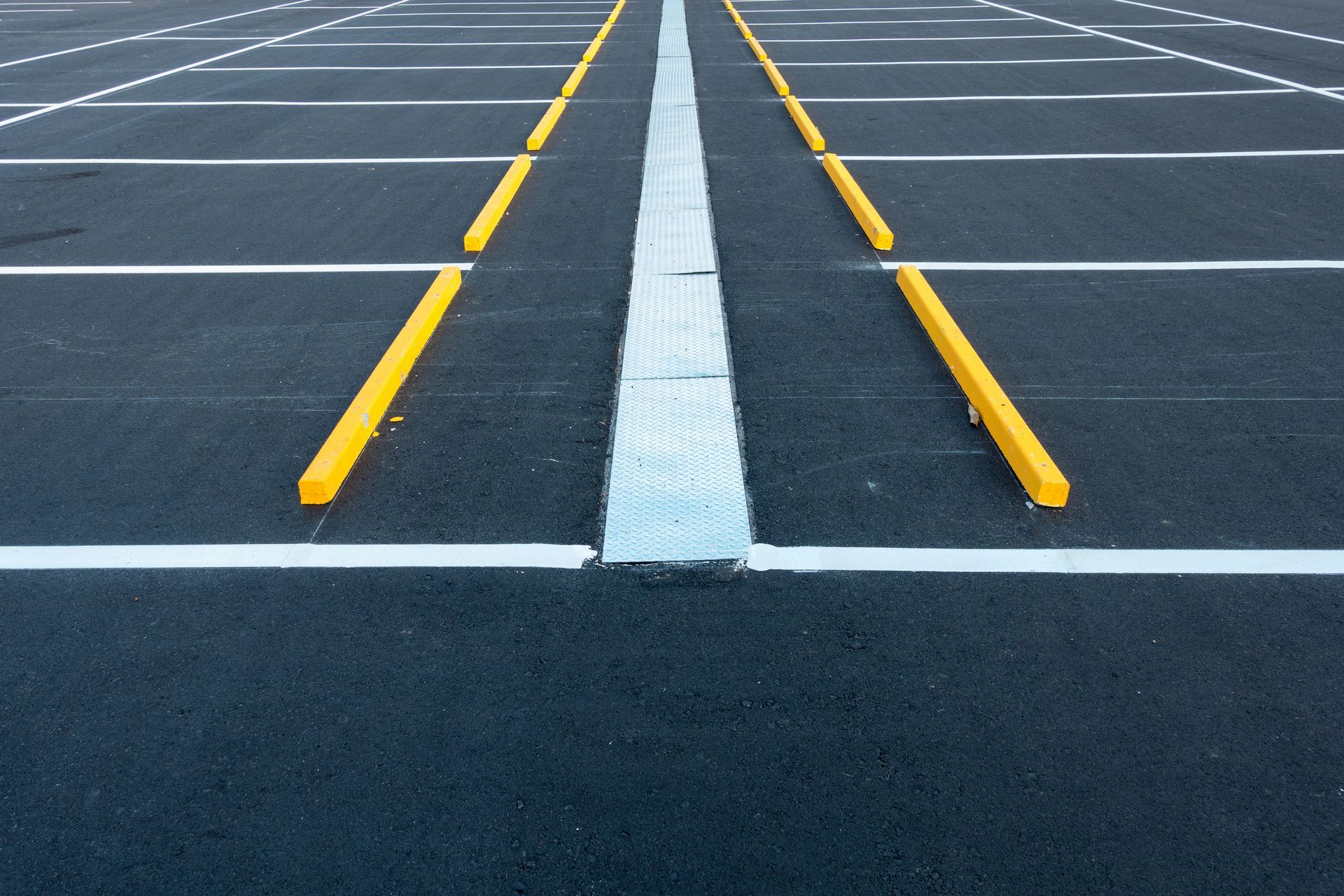
After maintenance is complete, your parking lot shows clearly marked spaces and traffic flow patterns that meet ADA width and signage requirements. Filled cracks no longer collect water that expands during freezing, and the surface is free of the rough edges and loose material that previously surrounded potholes. Customers can navigate the lot without dodging damaged areas, and the pavement presents a maintained appearance that reflects property upkeep standards.
Line striping uses traffic-grade paint formulated for durability under vehicle traffic and weather exposure, but it will fade over time and typically requires repainting every 18 to 24 months depending on usage levels. Crack filling and pothole repairs provide structural improvements that last multiple years, though new cracks will eventually develop as the asphalt continues aging and requires ongoing attention.
Answers to Frequent Maintenance Questions
Business owners often ask about scheduling, costs relative to full replacement, and how to prioritize maintenance tasks when budgets are limited. These answers provide practical guidance for planning lot upkeep.
What maintenance should happen first on a deteriorating lot?
Pothole repair takes priority because open holes worsen rapidly and create liability exposure, followed by crack filling to prevent new potholes from forming, then line striping once the pavement is structurally sound.
How does crack filling prevent future potholes?
Sealed cracks block water from reaching the base layer beneath the asphalt, preventing the saturation and freeze-thaw expansion that erodes base material and causes the surface to collapse into voids.
When is maintenance no longer effective?
Lots with more than 40 percent of the surface showing interconnected cracking, widespread base failure, or multiple deep depressions usually need resurfacing or reconstruction rather than patching and filling.
Why do some painted lines fade faster than others?
Lines in high-traffic areas such as drive aisles and entrances wear more quickly from tire friction, while parking space boundaries in less-traveled areas retain visibility longer under the same weather conditions in Chillicothe.
What weather conditions affect maintenance scheduling?
Crack filling and sealcoating require dry pavement and temperatures above 50 degrees for proper adhesion and curing, while line striping needs at least 24 hours without rain for paint to set completely.
Solid Rock Sealcoating & Asphalt Maintenance LLC develops maintenance plans based on current lot condition, traffic levels, and budget constraints to prioritize work that prevents accelerated deterioration. Call (740) 464-7938 to arrange a walkthrough of your commercial property.