Pavement Protection That Withstands Ohio Winters
Asphalt Sealcoating in Chillicothe for driveways and parking lots exposed to freeze-thaw cycles
Solid Rock Sealcoating & Asphalt Maintenance LLC applies asphalt emulsion sealcoating to residential and commercial surfaces throughout Chillicothe. The emulsion-based product forms a protective barrier over existing asphalt, blocking water penetration that leads to cracking during winter freeze-thaw events. Property owners notice darker, more uniform pavement color immediately after application, with improved resistance to UV damage and chemical spills from vehicle fluids.
Sealcoating involves cleaning the pavement surface completely, filling visible cracks, then applying two coats of asphalt emulsion that bonds to the aggregate. This process addresses the brittleness that develops as asphalt oxidizes, restoring flexibility to the binder that holds aggregate together. In Ohio's climate, unsealed asphalt loses this flexibility within three to five years, making it vulnerable to water intrusion that expands during freezing temperatures.
Schedule a pavement assessment to determine whether your asphalt is ready for sealcoating or requires crack repair first..
How Emulsion Sealcoating Extends Pavement Life
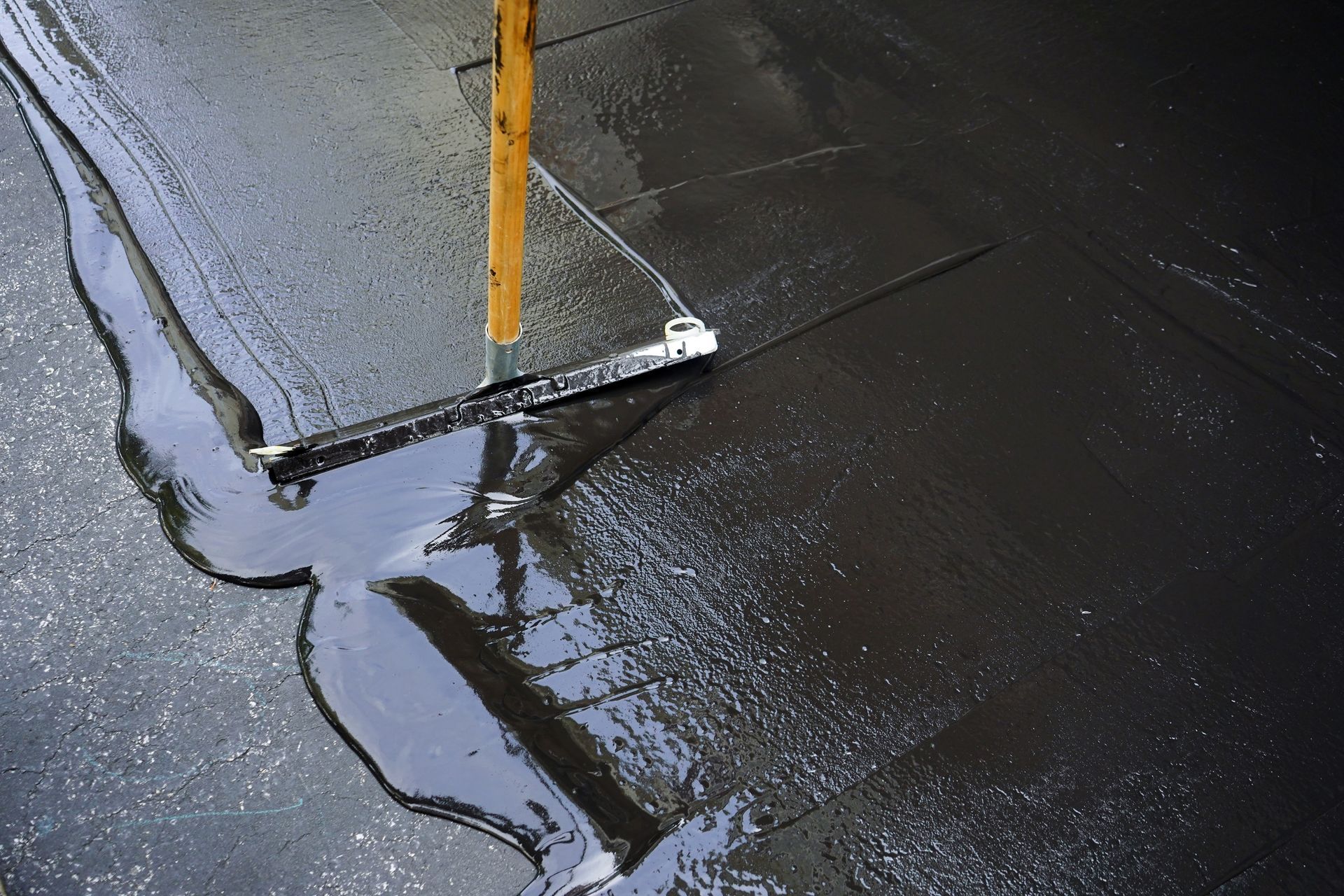
The asphalt emulsion used in sealcoating contains fine particles of asphalt suspended in water, along with additives that improve adhesion and curing time. Once applied, the water evaporates and leaves behind a flexible layer that fills surface voids while remaining porous enough to allow trapped moisture to escape. This differs from coal tar products, which create a harder, less breathable surface.
After Solid Rock Sealcoating & Asphalt Maintenance LLC completes the application, you'll see a uniform black finish that no longer shows the gray, weathered appearance of oxidized asphalt. Water beads on the surface instead of soaking into pores, and the pavement resists staining from oil drips and gasoline spills. The restored binder flexibility means the surface can contract and expand with temperature changes without developing new surface cracks.
Sealcoating works best on asphalt that still has structural integrity—it protects sound pavement but does not repair underlying base failures or deep alligator cracking. Properties with severe deterioration require patching or resurfacing before sealcoating provides meaningful protection. Timing matters as well, since sealcoating requires at least 48 hours of dry weather and temperatures above 50 degrees for proper curing..
What Property Owners Ask About Sealcoating
Clients in Chillicothe often ask about timing, application methods, and how sealcoating fits into broader pavement maintenance. These questions address both the process and the results property owners should expect.
How often does asphalt need sealcoating?
Most residential driveways benefit from sealcoating every two to three years, while commercial parking lots with heavier traffic may require treatment every 18 to 24 months depending on wear patterns and exposure.
What preparation happens before sealcoating?
The pavement is cleared of debris, oil spots are treated with a primer, and cracks wider than a quarter-inch are filled with rubberized crack filler that remains flexible after curing.
Why does fresh sealcoating look shiny at first?
The emulsion contains water that creates a wet appearance until it fully cures, typically within 24 to 48 hours depending on temperature and humidity levels in Chillicothe during application.
When is asphalt too damaged for sealcoating?
Pavement with widespread alligator cracking, sunken areas, or exposed aggregate requires structural repair before sealcoating can provide protection, since the coating only addresses surface wear.
What should I avoid after sealcoating?
Keep vehicles off the surface for at least 24 hours, and avoid sharp turns or heavy loads for 48 hours to prevent scuffing or marring the finish while it cures completely.
Solid Rock Sealcoating & Asphalt Maintenance LLC evaluates pavement condition before recommending sealcoating to verify that the surface will benefit from the treatment. Request a property inspection to review your asphalt's readiness for protective coating.